.png)
Why Early Learning Centers Play a Key Role in Preschool Education
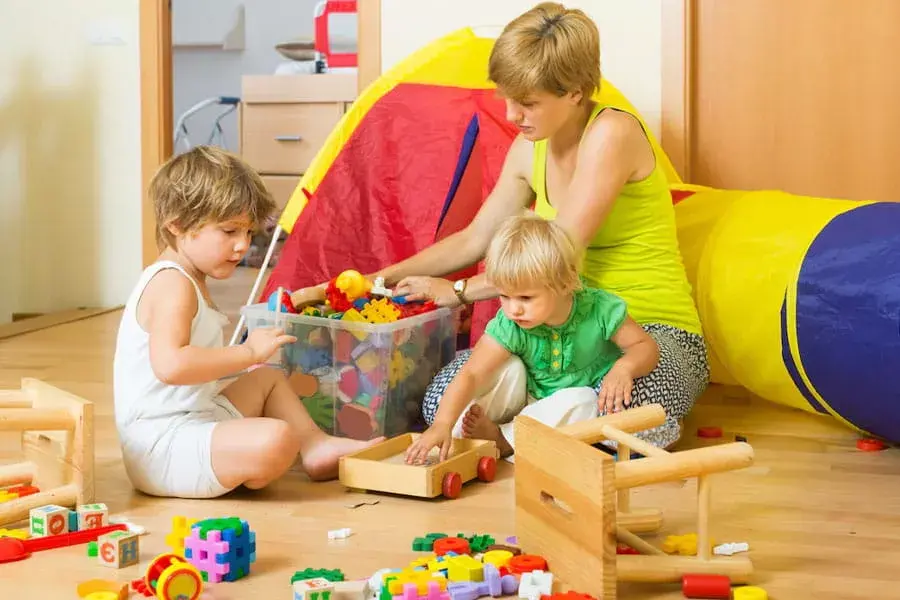
Early childhood is a critical stage in a child’s development. During these years, children build the foundation for future learning and behavior. So, the selection of the right learning environment is very crucial to the parents.
Early learning centers assist kids during this crucial period. They offer routines, teaching activities, and nurturing instructions. Consequently, childhood learners acquire key academic and life skills. In addition to that, these centers help children gain confidence while exploring the world around them.
Building a Strong Foundation for Learning
Early learning centers help children acquire basic thinking skills. The children are taught in a structured lesson and through interesting activities.
Key benefits include:
The knowledge of letters, figures, colors, and numbers.
Developing curiosity and critical thinking.
Development of initial problem-solving skills.
Learning routine activities and classroom organization.
Moreover, lessons are made to be exciting through storytelling, music, and games by teachers. Therefore, children would remain inspired and willing to learn. Besides, structured learning enhances school preparedness.

Encouraging Social and Emotional Growth
Kids have to be taught how to connect with others. There is a lot of social development in early learning centers.
Children learn many useful skills such as-
Sharing toys and classroom materials
Taking turns during group activities
Working together with classmates
Expressing emotions in healthy ways.
Children are directed by teachers in conflicts. Hence, children get to learn patience and empathy. As a result, children develop emotional intelligence and confidence.
Developing Language and Communication Skills
Preschool years play a major role in language growth. Children in early learning centers are developed in an environment that is full of conversation and storytelling.
Children develop communication skills with:
Reading and storytelling (daily).
Singing songs and rhymes
Group discussions and show and tell.
Giving questions and exchanging ideas.
Moreover, educators accelerate children to be able to express themselves. Due to this, vocabulary develops quickly. Children are also confident speakers and listeners.
Supporting Physical Development
Development requires physical exercise. Numerous activities in early learning centers reinforce both fine and gross motor activities.
Children engage in activities like:
Drawing, coloring, and craft work.
Constructing using blocks and puzzles.
Outdoor play, running, and climbing.
Training balance and coordination.
These activities enhance muscle growth and coordination. Besides, active play ensures that children are active and attentive during the day.
Preparing Children for Kindergarten
Preschools will assist the children in shifting into institutional learning. They impart practices that favor classroom performance.
Important preparation skills are:
Following instructions from teachers
Completing simple tasks independently
Participating in group discussions
Organizing personal belongings.
Children also learn routines in classrooms and responsibility. Therefore, they go to kindergarten as confident and independent individuals.
Providing a Positive and Healthy Workplace
Children thrive in environments where they feel secure and supported. The early learning centers are concerned with safety, care, and emotional well-being.
Important features of nurturing environments include:
Caring and experienced teachers
Structured daily routines
Safe classrooms and play areas
Individual attention for every child
Due to such support, children become free to explore new ideas. In the middle of these benefits stands Scholars Academy, a trusted early learning center dedicated to early childhood development.
Scholars Academy provides infant and toddler programs throughout the year with full-time, part-time, and half-day options. We are guided by the philosophy of establishing a caring and nurturing environment. All children are secure, nurtured, and motivated to learn.
Besides, with more than 40 years in the community, Scholars Academy proudly welcomes second-generation families. This strong trust reflects the lasting relationships built with parents over time.
Promoting Creativity and Curiosity
Creativity plays an important role in early learning. Early learning facilities promote exploration through the use of practical activities.
Children develop creativity through:
Art and craft projects
Music and dance activities
Pretend play and storytelling
Simple science experiments
These activities stimulate imagination and curiosity. Also, children learn by being explored and discovered. So, they develop trust in their thoughts and skills.
Strengthening Parent and Teacher Partnerships
Good communication between the parents and teachers enhances the learning process in a child. The early learning centers assist the families by providing:
Regular progress updates
Parent-teacher meetings
Family developmental training.
Parental participation opportunities.
Due to this cooperation, kids are given constant attention at school and at home. This makes their learning process stronger and more effective.
Long-Term Benefits of Early Learning Centers
Quality early education creates long-term benefits. Young learners who attend early learning centers often perform better in school.
Long-term benefits include:
Better performance at school.
Improved social behavior
Better communication skills
Greater confidence in learning
Besides, children learn more quickly in new learning environments. Therefore, childhood experiences in learning have a role to play in success in life.
Early learning centers play a powerful role in preschool education. They promote and support intellectual, emotional, and social development in the most significant childhood years. Scholars Academy provides children with a friendly and conducive environment where they study, explore, and acquire the necessary skills.


Comments